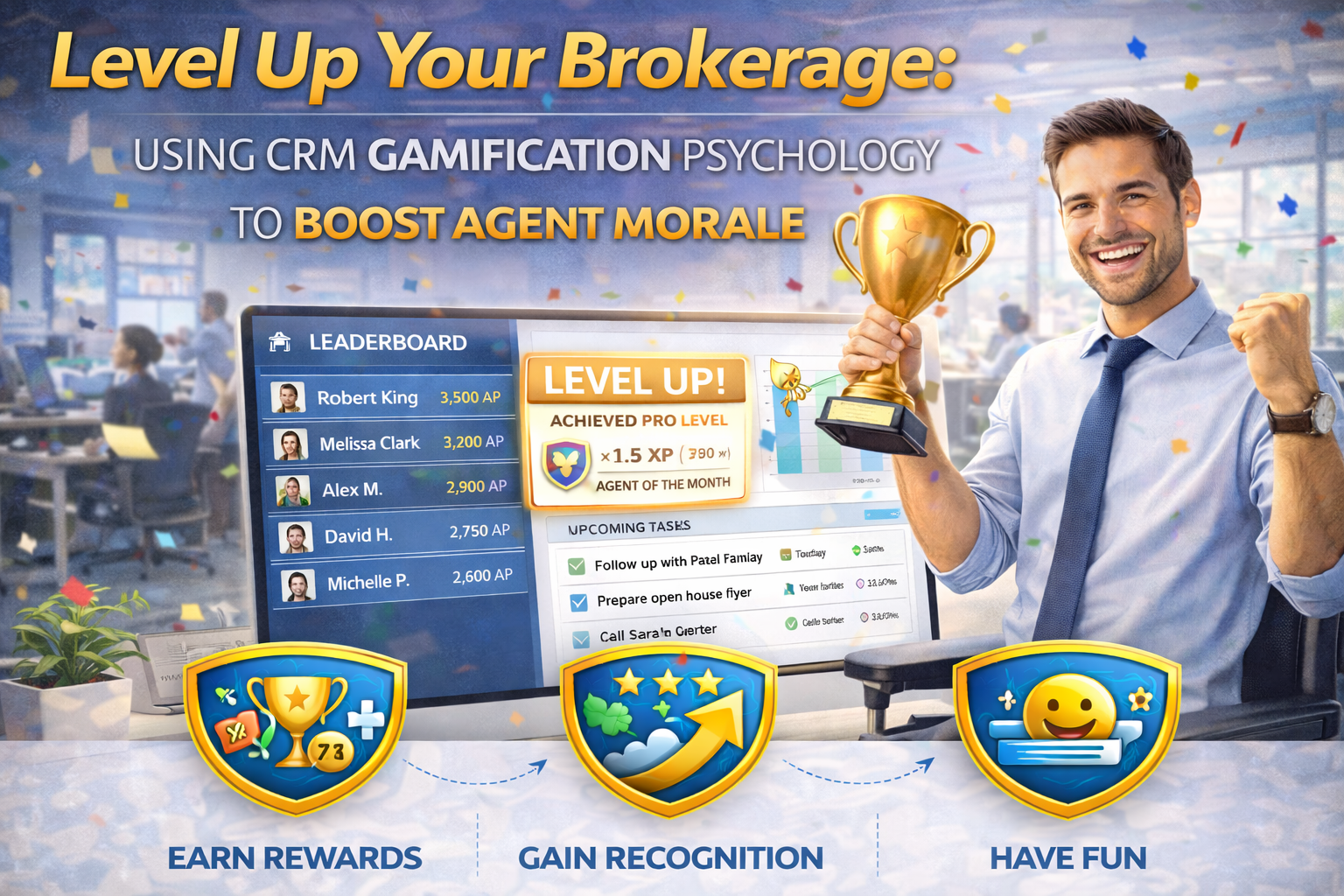
Is your real estate team burning out? Discover how CRM Gamification Psychology turns tedious lead generation into an engaging, morale-boosting sales engine.
Table of Contents
I remember walking into a mid-sized brokerage in downtown Austin a few years ago. The energy was completely flat. Real estate agents were staring blankly at their screens, begrudgingly clicking through their daily tasks. The managing broker, a veteran in the local real estate market, confessed that his team was hitting a wall. “They hate the database,” he admitted. “If it’s not showing houses or closing deals, they just don’t want to do it.”
It’s a classic industry struggle. We hire salespeople for their charisma and drive, then chain them to a desk to do administrative data entry. But there is a way to bridge this gap. By leveraging CRM Gamification Psychology, you can transform the most tedious parts of lead generation into a highly engaging, morale-boosting experience.
Understanding the Basics of CRM Gamification Psychology
At its core, CRM Gamification Psychology isn’t about turning work into a video game just for laughs. It is the strategic application of behavioral science to motivate your team. Humans are naturally wired to seek out rewards, recognition, and a sense of progress.
When an agent updates property listings or logs a phone call, their brain usually registers it as a chore. But if logging that call triggers a visual progress bar or unlocks a new achievement tier, you tap into their dopamine receptors. You change the emotional reaction to the task.
The concept pulls heavily from established behavioral frameworks. For a deeper understanding of how these reward systems influence human behavior, Wikipedia’s entry on Operant Conditioning offers a fascinating look at positive reinforcement. When applied to a sales pipeline, this psychological principle works wonders.
Why Top-Producing Agents Need More Than Just Commission
You might think that the promise of a massive commission check is enough to keep agents motivated. In reality, real estate is a long game. An agent might make fifty calls on a Tuesday and not see a dime from those efforts for three months. That massive delay between action and reward is a major motivation killer.
This is exactly where CRM Gamification Psychology shines. It provides instant micro-rewards. When an agent successfully books three seller appointments in a single afternoon, the system immediately recognizes that achievement. It bridges the gap between the daily grind and the distant payday.
Turning Lead Generation into a Friendly Competition
Real estate agents are inherently competitive. You can channel that competitive spirit productively. Instead of punishing agents for not making their calls, you reward them for hitting specific milestones within the system.
- 10 points for a new buyer lead added to the database.
- 20 points for a completed property showing.
- 50 points for an accepted offer.
Suddenly, cleaning up a messy database isn’t a punishment from management; it’s a strategy to win the week.
Implementing CRM Gamification Psychology in Your Brokerage
You don’t need to be a tech wizard to make this work. Many modern real estate platforms already have these features built-in; you just have to turn them on and frame them correctly for your team.
However, successful CRM Gamification Psychology requires balance. If the goals are too easy, the rewards feel meaningless to your top-producing agents. If they are too hard, rookies will simply give up. You need to set attainable, incremental targets that keep the momentum going for everyone.
According to insights from the National Association of Realtors (NAR), agent retention is one of the biggest challenges for brokers today. Fostering a fun, engaging environment is a massive factor in keeping your best talent from jumping ship to a competitor.
The Power of the Leaderboard
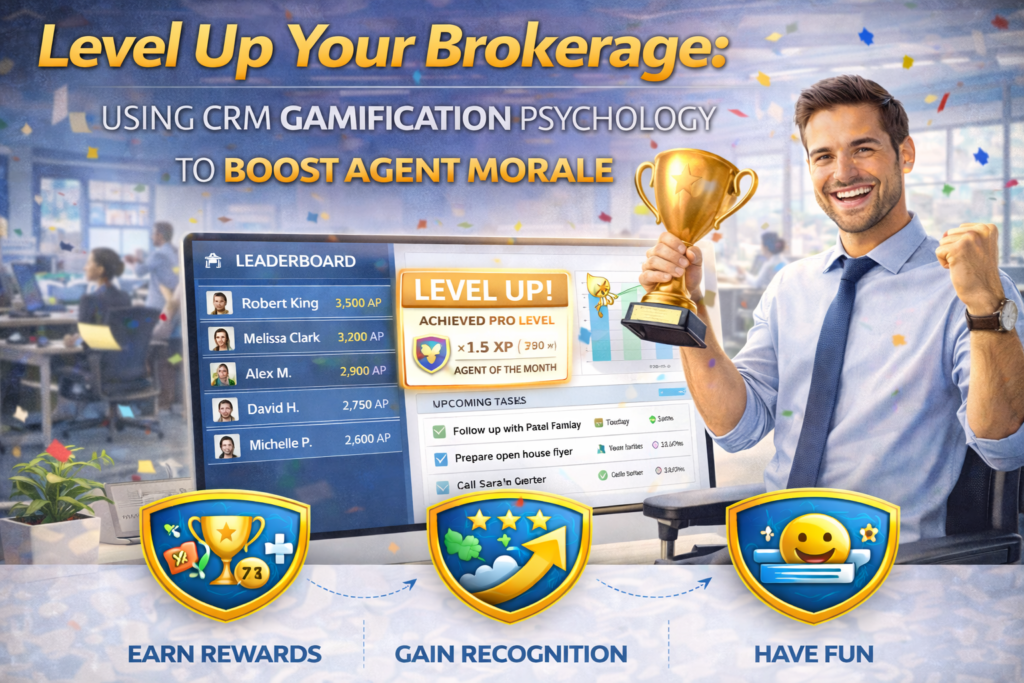
Nothing drives a sales team quite like a visible leaderboard. But to truly master the art of CRM Gamification Psychology, you must display it thoughtfully. If the same veteran agent is always at the #1 spot, the newer agents will quickly get discouraged.
Instead, try rotating the metrics. One week, the leaderboard tracks the highest number of newly activated property listings. The next week, it tracks the most past-client check-in calls. This gives everyone on the team a chance to shine and keeps the environment dynamic.
Real-Life Examples: When CRM Gamification Psychology Actually Works
Let’s look at a sluggish late-summer market. Buyers are on vacation, and new listings are sparse. Team morale usually plummets around this time. A savvy broker will use CRM Gamification Psychology to pivot the team’s focus toward database cleanup and future pipeline building.
By launching a “Summer Sprint” campaign within the system, agents earn badges for verifying old email addresses or setting up automated property alerts for stale buyer leads. I watched one office double their usual outreach numbers in August simply because the winning team got an extra day of PTO and a premium parking spot.
The agents were having fun, and the broker was securing future revenue. It was a total win-win scenario created entirely by shifting the psychological approach to daily tasks.
The Pitfalls to Avoid with CRM Gamification Psychology
While the benefits are huge, you have to be careful not to create a toxic environment. If poorly managed, CRM Gamification Psychology can lead to agents hoarding leads or prioritizing quantity over quality. You don’t want someone making 100 terrible phone calls just to top the leaderboard.
Ensure your metrics reward meaningful interactions. Tie points to actual conversations or confirmed appointments, not just dials. Furthermore, make sure to celebrate team milestones, not just individual victories, to maintain a collaborative and supportive office culture.
FAQ Section
What is the main goal of CRM Gamification Psychology? The primary goal is to increase user adoption and boost morale by applying game design elements—like points, badges, and leaderboards—to everyday sales and administrative tasks. It makes boring work feel rewarding.
Will experienced real estate agents find this childish? Only if you present it poorly. Highly driven professionals love to win. If you tie the game mechanics to metrics that actually grow their business and income, veteran agents will often become your fiercest competitors.
How do I choose the right rewards for my team? Mix it up. Some agents want public recognition, while others want tangible rewards like a gift card to a nice local restaurant or a prime floor-duty shift. The best approach is to simply ask your team what motivates them.
Can CRM Gamification Psychology fix a broken sales pipeline? It can definitely help revive it. By incentivizing the daily habits that build a pipeline—like consistent follow-ups and lead tagging—you naturally fix the underlying behavioral issues that cause a pipeline to dry up in the first place.
Do I need expensive custom software for this? Not usually. Many out-of-the-box real estate platforms have basic gamification features included. You can also run a low-tech version using a physical whiteboard and your standard database reporting tools.
Conclusion
Managing a real estate team is tough. You are managing independent contractors, big egos, and volatile market conditions all at once. But you don’t have to rely on sheer willpower or aggressive management tactics to keep your agents productive.
By integrating CRM Gamification Psychology into your daily operations, you tap into the core of human motivation. You turn the boring, necessary administrative tasks of closing deals into a rewarding experience that keeps your agents engaged and your database thriving. Stop fighting your team over data entry and start making it a game they actually want to play.
