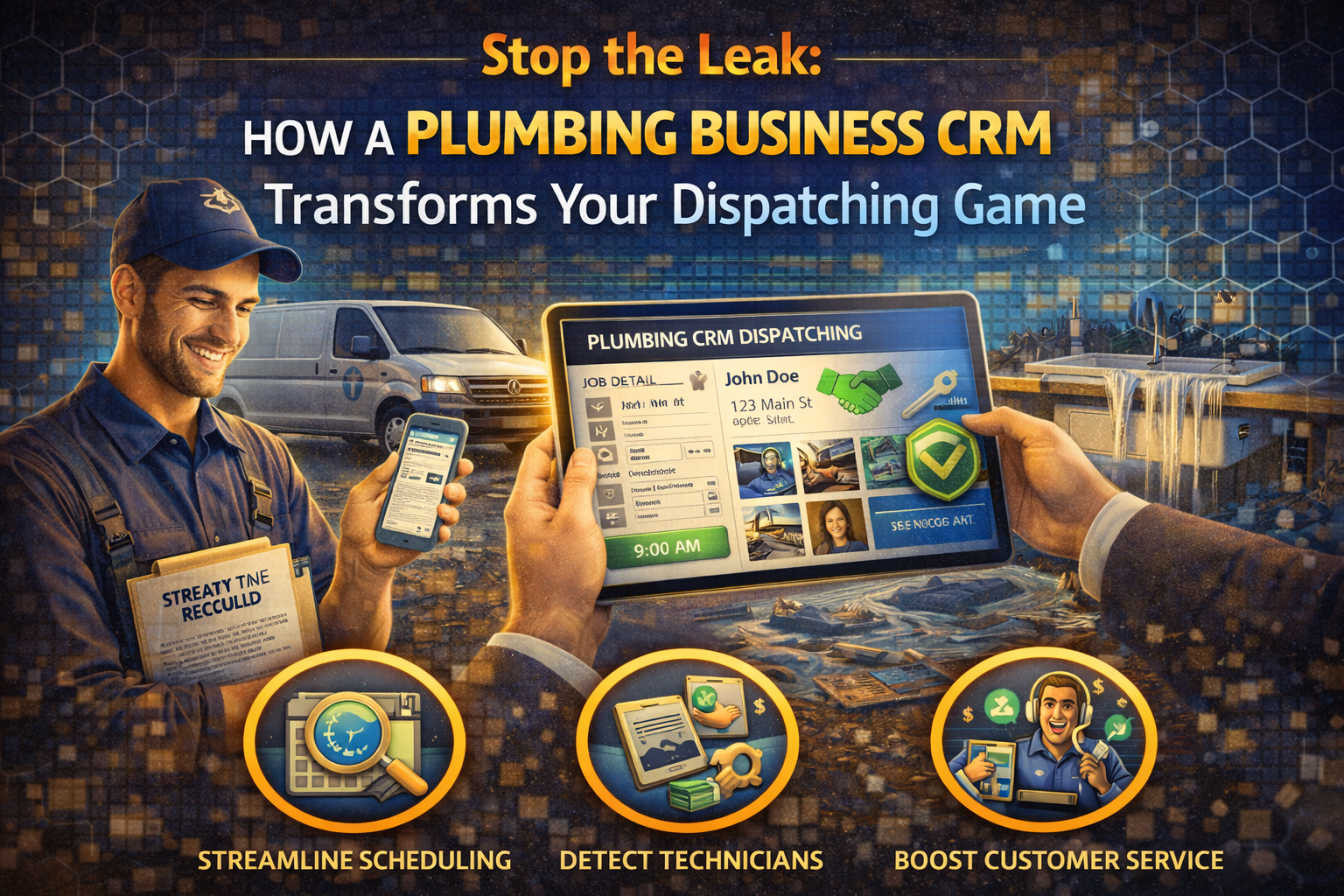
Tired of scheduling chaos? Discover how a Plumbing Business CRM automates your dispatching, improves technician efficiency, and boosts your bottom line.
Table of Contents
I’ll never forget a conversation I had with a local property manager named Mike. He was managing a portfolio of about fifty rental units, and he was at his wit’s end. It wasn’t the tenants or the rent collection causing the grey hair—it was the maintenance. Specifically, it was the plumbing. He’d call his go-to guy for a burst pipe in a duplex, only to find out three hours later that the technician was actually on the other side of town, stuck in traffic, and had completely forgotten about the emergency call.
This kind of chaos is the silent killer of a service-based company. Whether you are an independent contractor or a large firm servicing high-end real estate, your reputation lives and dies by your response time. If you’re still relying on a whiteboard, a stack of sticky notes, or a frantic group chat to manage your team, you are leaving money on the table.
In the modern trade industry, moving to a specialized Plumbing Business CRM isn’t just a “nice-to-have” upgrade. It is the engine that drives your entire operation. By automating your dispatching, you take the guesswork out of the day. You stop reacting to emergencies and start orchestrating them. It’s about creating a seamless bridge between the office and the field so that your technicians spend more time turning wrenches and less time checking their mirrors for a missed turn.
Why Manual Dispatching is Dragging Down Your Profits
The old-school way of dispatching is reactive. A call comes in from a frantic homeowner with a flooded basement, and the office staff starts calling every van to see who is closest. This “vocal dispatching” is slow, prone to human error, and incredibly stressful for everyone involved.
When you implement a Plumbing Business CRM, you replace that chaos with a digital map. The software knows exactly where every van is, what job they are currently on, and how long they’ve been there. It’s like having a bird’s eye view of your entire business. Instead of a dispatcher guessing who should take the next call, the system suggests the most logical choice based on location and skill set.
This efficiency is vital for maintaining high property values in the residential sector. A fast response to a leak can prevent thousands of dollars in water damage, making your service an essential asset for local homeowners and real estate investors alike.
The Magic of Automated Scheduling and Routing
The core benefit of a Plumbing Business CRM is its ability to handle the “math” of the day. Modern systems use advanced algorithms to optimize routes. If a technician has five calls, the CRM doesn’t just list them in the order they came in. It arranges them in a way that minimizes driving time.
- GPS Integration: Real-time tracking allows the office to see traffic delays before the technician even hits them.
- Instant Notifications: When a job is assigned, the tech gets a push notification on their phone with the full service history of the property.
- Customer Alerts: The system can automatically text the homeowner with an “On my way” message and a link to track the van, much like a ride-sharing app.
Using a Plumbing Business CRM also means you can say goodbye to the “afternoon slump” where technicians sit in their vans waiting for the next address. The schedule is pushed to them in real-time, ensuring a constant flow of work and higher billable hours at the end of the week.
Improving the Customer Experience for Real Estate Professionals
If you work with real estate agents or property managers, they demand a higher level of reporting. They need to know when the job was completed, see photos of the repair, and get an invoice immediately for their records.
A specialized Plumbing Business CRM allows your team to upload before-and-after photos directly to the client’s profile. This creates a digital paper trail that is worth its weight in gold during a home inspection or a tenant dispute. When a property manager knows they can rely on your digital records, you become their first call every time.
According to the National Association of Realtors (NAR), well-maintained mechanical systems are a primary driver of home resale value. By using a Plumbing Business CRM to provide documented, professional maintenance, you are helping your clients protect their most valuable assets.
Closing the Loop: From Dispatch to Invoicing
The biggest “leak” in many businesses isn’t in a pipe—it’s in the billing. When technicians have to fill out paper invoices at the end of a long shift, things get missed. Parts aren’t recorded, and labor hours are rounded down.
With a Plumbing Business CRM, the dispatching ticket is the invoice. The moment the technician marks the job as complete, the system calculates the totals based on the time spent and the materials used. The client can sign off on a tablet right there at the kitchen table.
This immediate “cash-to-cash” cycle is a game-changer for your cash flow. You aren’t waiting for a tech to drop off a crumpled folder of paperwork on Friday afternoon so you can bill on Monday. For a deeper look at the administrative side of service management, Wikipedia’s entry on Customer Relationship Management offers a great foundation on how these digital systems evolved to handle complex field operations.
Data-Driven Growth: Beyond the Daily Grind
Because every interaction is logged within your Plumbing Business CRM, you start to accumulate a massive amount of data. You can see which technicians are the most efficient, which neighborhoods are the most profitable, and which types of jobs are taking longer than they should.
This isn’t about micromanaging; it’s about making informed decisions. If you see that you are getting dozens of calls from a specific new development, you can adjust your marketing to target that area. You can identify seasonal trends and ensure you are fully staffed before the first winter freeze hits.
As noted by the Lincoln Institute of Land Policy, the way we manage urban infrastructure is becoming more digital, and that includes the private services that keep our homes running. Adapting to a Plumbing Business CRM keeps you ahead of the curve in an increasingly tech-savvy market.
Essential Features to Look For
When you are vetting software for your company, don’t get distracted by flashy features you’ll never use. Focus on the tools that actually help you get to the next job faster.
- Drag-and-Drop Dispatching: The interface should be intuitive enough that your office staff can move jobs around with a mouse click.
- Mobile App for Technicians: It must work offline, as many plumbing jobs happen in basements where cell service is non-existent.
- Maintenance Agreements: The Plumbing Business CRM should track recurring service contracts for commercial clients and multi-family buildings.
- Inventory Management: It should sync with your vans so you know exactly which technician has that specific water heater part in stock.
By choosing the right Plumbing Business CRM, you are building a scalable foundation. You can grow from two vans to twenty without the wheels falling off your scheduling process.
FAQ Section
Will a Plumbing Business CRM be too complicated for my older technicians? Change can be tough, but modern systems are designed with the “user experience” in mind. Most are no more complicated than using a social media app. Once a tech realizes they no longer have to drive back to the office to drop off paperwork, they usually become the biggest fans of the Plumbing Business CRM.
How much does a Plumbing Business CRM typically cost? Most are billed as a monthly subscription per user. While the cost varies, the “return on investment” usually happens within the first month through saved fuel costs, eliminated paperwork errors, and increased billable hours.
Can I integrate my Plumbing Business CRM with my accounting software? Yes, most top-tier platforms sync directly with tools like QuickBooks. This ensures that your books are always up to date and reduces the need for manual data entry.
Does a Plumbing Business CRM help with marketing? Absolutely. You can use the data in your Plumbing Business CRM to send out automated reminders for annual drain cleanings or water heater flushes, keeping your brand top-of-mind for your best customers.
Is my data safe in a Plumbing Business CRM? These platforms use the same level of encryption as major banks. Your customer lists, service histories, and financial records are much safer in a secure cloud-based Plumbing Business CRM than they are in a physical filing cabinet.
Conclusion
At the end of the day, your plumbing company is a logistics business as much as it is a repair business. You are selling your time, your expertise, and your reliability. A Plumbing Business CRM is the tool that ensures you are maximizing all three.
Don’t let scheduling snafus and dispatching delays hold your business back. Embrace the automation that allows you to provide a “white-glove” experience to every homeowner and real estate pro you serve. When you tighten up your operations with a Plumbing Business CRM, you aren’t just fixing pipes—you’re building a more profitable, professional, and sustainable future for your entire team.
