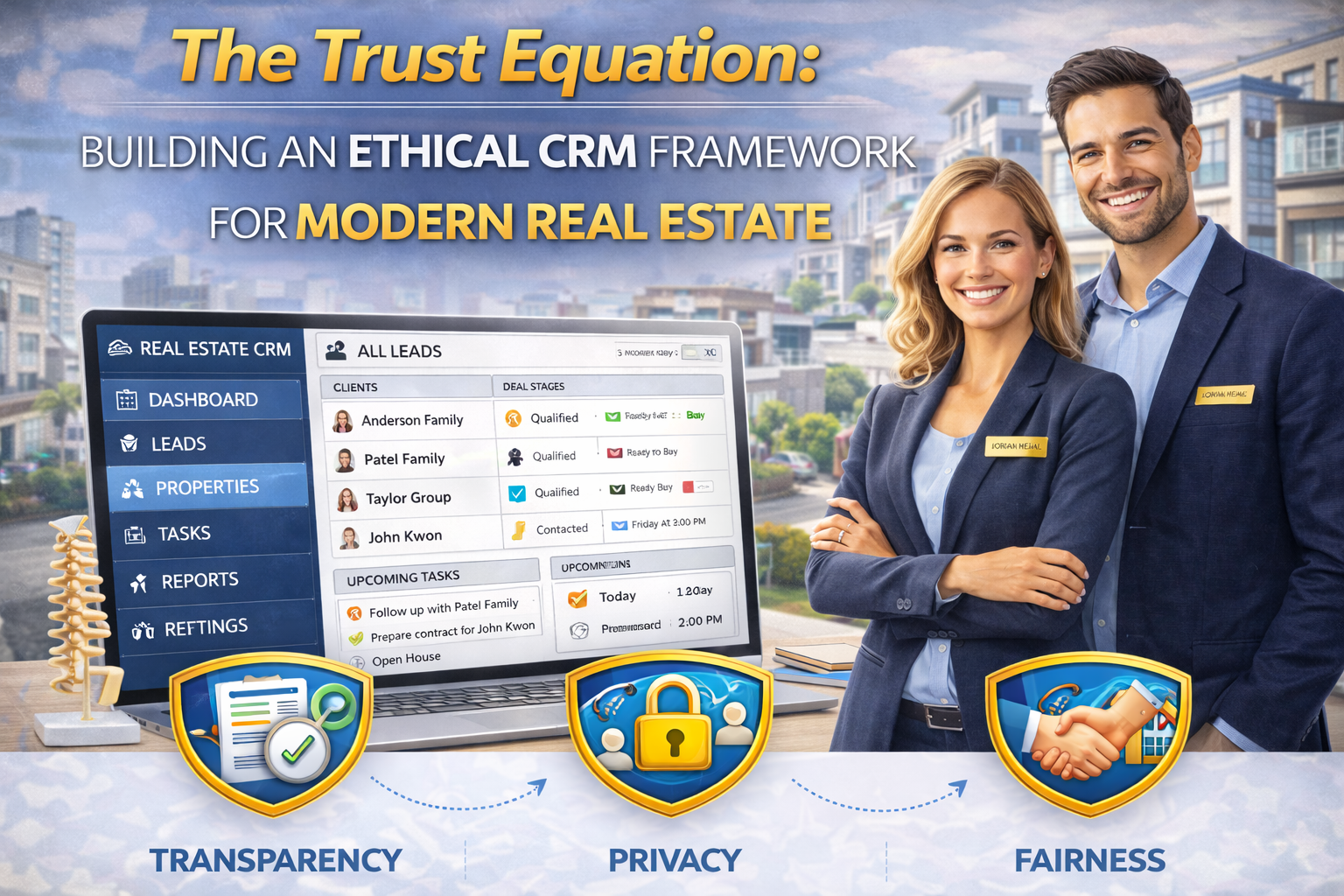
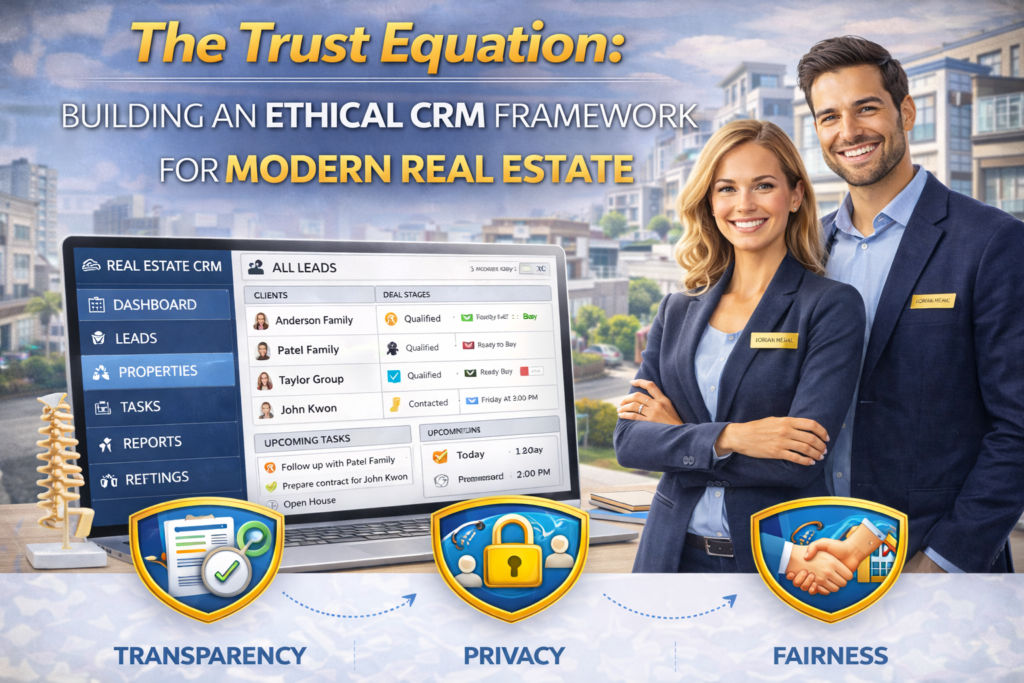
Privacy is the new luxury. Discover how to build an Ethical CRM Framework that protects customer data and builds lasting trust in your real estate business.
Table of Contents
I’ll never forget a chilling conversation I had with a brokerage owner about three years ago. He was bragging about a new data-scraping tool he’d bought that could “predict” when a homeowner was going to get a divorce or lose their job, allowing his agents to swoop in before the “For Sale” sign even hit the yard. He thought it was brilliant marketing; I thought it felt like digital stalking.
As real estate professionals, we sit on a goldmine of sensitive information. We know our clients’ social security numbers, their financial net worth, their family struggles, and their future dreams. In our rush to automate and scale, many in the industry have treated this data like a commodity to be exploited rather than a trust to be guarded. But the tide is turning.
Whether you are a solo agent or managing a massive national portfolio, establishing an Ethical CRM Framework is no longer just a “nice-to-have” corporate social responsibility project. It is a fundamental survival strategy. In an era of rampant data breaches and increasing “creepiness” in digital marketing, your clients are looking for a safe harbor. They want to know that when they share their lives with you, that data isn’t being sold to the highest bidder or fed into an opaque algorithm without their consent. An Ethical CRM Framework is about drawing a line in the sand and saying, “Our profit will not come at the expense of your privacy.”
Why Data Ethics is the New “Curb Appeal”
In the past, we judged a brokerage by its office location or the quality of its glossy brochures. Today, clients judge us by how we handle their digital footprint. If a buyer mentions a specific interest in a neighborhood on your website and is suddenly bombarded with aggressive, unprompted ads across every social platform, that trust begins to erode.
An Ethical CRM Framework shifts the focus from “what can we get away with” to “what is right for the customer.” It’s about transparency. It’s about making sure your privacy policy isn’t buried in 50 pages of legalese that even a lawyer wouldn’t read. When you lead with honesty, you aren’t just complying with the law; you are building a brand that stands for integrity.
In a crowded market, an Ethical CRM Framework becomes a competitive advantage. I’ve seen luxury buyers walk away from top-tier firms because they felt their data was being handled loosely. In high-stakes transactions, privacy is a premium service.
The Pillars of a Transparent Data Strategy
Building an Ethical CRM Framework starts with a fundamental shift in how we collect information. Many agents operate on a “collect everything, ask for forgiveness later” mindset. But an ethical approach requires purposeful data collection.
- Consent-First Engagement: Don’t just add every person you met at an open house to your drip campaign. Ask for permission and explain exactly what kind of value they will receive.
- The Right to be Forgotten: Your Ethical CRM Framework must include a clear, easy way for clients to request that their data be purged.
- Data Minimization: If you don’t need a client’s birth date or their spouse’s employer to help them find a house, don’t ask for it. The less data you hold, the less risk you carry.
According to data often discussed by the National Association of Realtors (NAR), data security is a top-five concern for modern homebuyers. By implementing an Ethical CRM Framework, you are directly addressing the anxieties of your target market. You are telling them that their safety is part of your service.
Protecting Against the “Silent” Breach
We often think of data threats as masked hackers in dark rooms, but the biggest risk to an Ethical CRM Framework is often internal. It’s the agent who leaves their laptop open at a coffee shop or the staff member who uses “Password123” for their database login.
Security and ethics are two sides of the same coin. You cannot have an Ethical CRM Framework if your technical safeguards are weak. This means implementing two-factor authentication (2FA), encrypting your cloud storage, and conducting regular audits of who has access to what. In the real estate world, a data breach isn’t just a technical glitch; it’s a violation of the fiduciary duty we owe our clients.
For a deeper look at the legal standards that are shaping these boundaries, Wikipedia’s entry on Data Privacy provides an excellent overview of the global shift toward stricter regulations like GDPR and CCPA. Understanding these frameworks is the first step in building your own Ethical CRM Framework.
Managing Third-Party Vendors and “Shadow” Data
Your Ethical CRM Framework is only as strong as its weakest link. In real estate, we use a dozen different tools—automated valuation models, lead generation services, and digital signature platforms.
You must ask yourself: What are these companies doing with the data you feed them? If your “free” lead tool is secretly selling your client’s contact info to mortgage lenders, your Ethical CRM Framework has been compromised. You have to vet your vendors with the same scrutiny you would use for a home inspector. If they can’t provide a clear Data Processing Agreement (DPA), they shouldn’t be part of your tech stack.
As noted by the Lincoln Institute of Land Policy, the digital transformation of land and property records is making transparency more critical than ever. As we move toward more integrated digital ecosystems, the need for a robust Ethical CRM Framework will only grow.
Training Your Team: Ethics Over “The Hustle”
You can buy the best software and write the best policies, but if your agents don’t buy into the philosophy, your Ethical CRM Framework will fail. The real estate industry is famous for the “hustle,” which often encourages cutting corners to get the lead.
To overcome this, you have to make ethics part of your office culture.
- Regular Training: Don’t just talk about sales numbers; talk about data handling.
- Incentivize Compliance: Reward agents who maintain clean, consent-based databases.
- Clear Consequences: Make it known that violating the Ethical CRM Framework—such as sharing leads without permission—is a serious offense.
When the team sees that an Ethical CRM Framework actually leads to higher-quality referrals and longer client lifecycles, they will stop seeing it as a hurdle and start seeing it as a tool. Trust is a slow build, but it’s the only thing that sustains a business through a market downturn.
Real-Life Example: The Respectful Re-engagement
I recently worked with a property management firm that was struggling with a low “re-lease” rate. They realized their past tenants felt harassed by constant, generic marketing emails. We helped them implement an Ethical CRM Framework that allowed tenants to choose exactly what they wanted to hear about—maintenance tips, local events, or future listings. By giving the power back to the customer, their engagement rates skyrocketed. They didn’t need more data; they needed a more ethical way to use the data they had.
The Financial Reality: Why Ethics is Profitable
Some might argue that an Ethical CRM Framework limits your reach. I argue the opposite. In an world of “noise,” the person who respects boundaries stands out.
When you have a reputation for being the “secure” choice, you attract a higher caliber of client. Luxury sellers, in particular, are extremely sensitive to their privacy. If they know you have a rigorous Ethical CRM Framework in place, they will choose you over a competitor who is known for being “loose” with information. In the long run, the integrity of your Ethical CRM Framework will do more for your bottom line than any high-pressure sales tactic ever could.
FAQ Section
Is an Ethical CRM Framework required by law? While specific parts of an Ethical CRM Framework are mandated by laws like the CCPA or GDPR, the “ethical” part goes beyond legal requirements. It’s about doing what is right for the client, even if it isn’t strictly required by a statute.
How do I start building an Ethical CRM Framework for a small office? Start with a data audit. Look at what you are collecting and ask “why.” Then, update your privacy policy to be clear and human-readable. Finally, ensure every tool you use has two-factor authentication enabled. Small steps lead to a solid Ethical CRM Framework.
Can I still use automated marketing with an Ethical CRM Framework? Absolutely. The difference is in the consent. If a client has explicitly agreed to receive your market updates, sending them is perfectly ethical. The problem arises when you use data for purposes the client never agreed to.
Does an Ethical CRM Framework protect me from lawsuits? It certainly helps. By following a rigorous Ethical CRM Framework, you are documenting your “best efforts” to protect data. If a breach does occur, being able to show that you had ethical and technical safeguards in place can significantly mitigate your legal liability.
What should I do if a vendor violates my Ethical CRM Framework? You should have a “termination for cause” clause in your vendor contracts. If a tool you use is caught mishandling your clients’ data, you must be prepared to cut ties immediately to protect your reputation and your Ethical CRM Framework.
Conclusion
At the end of the day, real estate is a business built on human connection. We are invited into people’s most private moments, and they entrust us with their most valuable assets. Establishing an Ethical CRM Framework is simply the digital extension of the fiduciary duty we have practiced for decades.
Don’t let the shiny new tools of the digital age blind you to the timeless importance of trust. Invest in the technology and the training required to protect your clients’ privacy. When you lead with an Ethical CRM Framework, you aren’t just checking a compliance box—you are building a fortress of trust that will protect your business and your clients for years to come.
