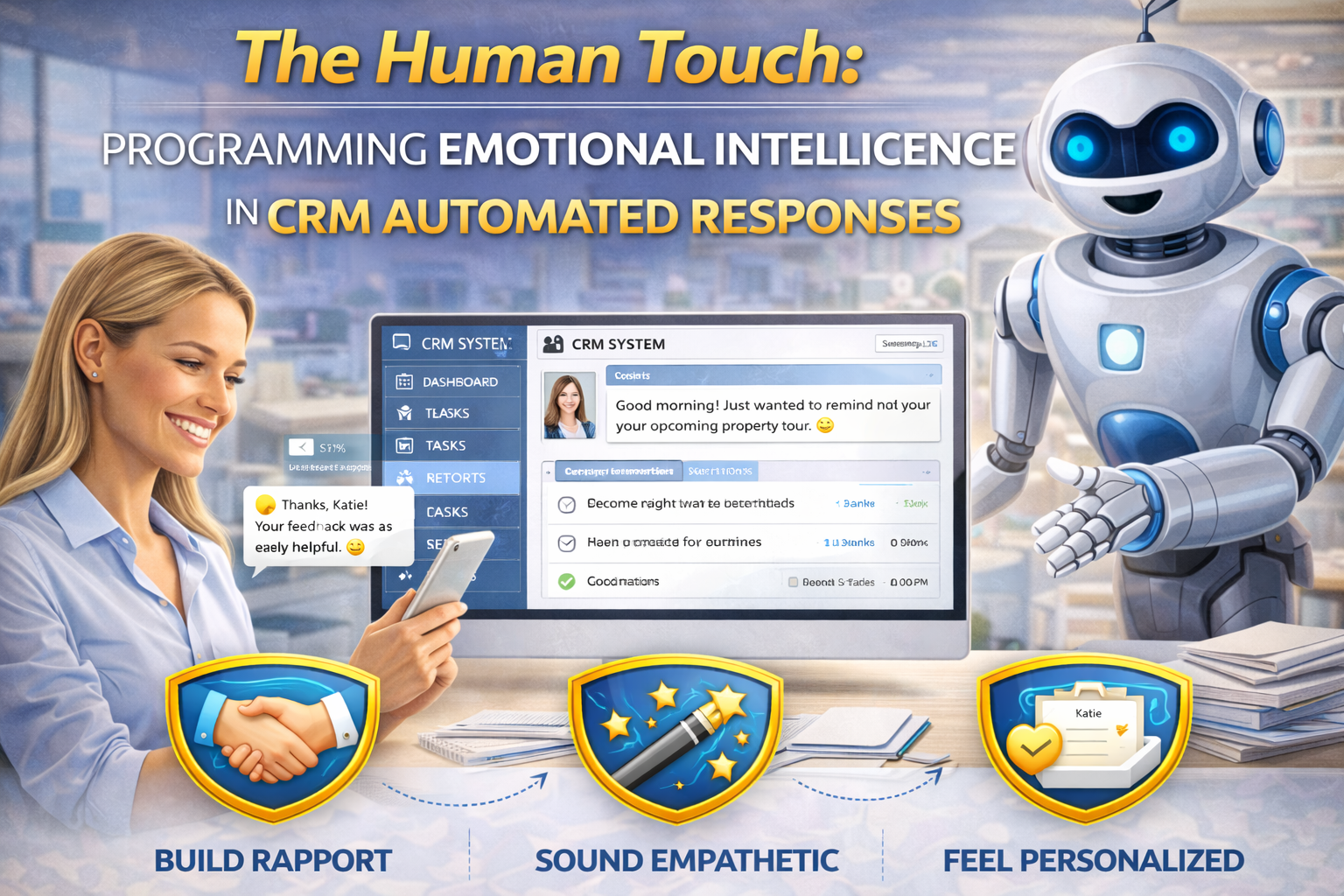
Stop sending cold, robotic emails. Learn how to program Emotional Intelligence in CRM automated responses to build trust and close more real estate deals.
Table of Contents
I remember helping a family navigate a complex probate sale last spring. They were overwhelmed, grieving, and filled out a contact form on a broker’s website at 2 AM. The automated reply they received? “CONGRATULATIONS! You’re one step closer to your dream home!” It was completely tone-deaf. They never replied to that broker, and honestly, I don’t blame them.
When we rely too heavily on basic automation for our lead generation, we risk alienating the very people we want to help. Buying or selling a home is deeply personal. That’s why programming Emotional Intelligence in CRM is no longer just a fancy tech trend. It is an absolute necessity for survival in the local real estate market. We have to teach our systems how to “read the room” before hitting send.
Why Automation Needs Empathy
The housing market is inherently stressful. Buyers are terrified of interest rates, and sellers are anxious about moving logistics. When they reach out, they aren’t looking for a brochure; they are looking for a guide.
Incorporating Emotional Intelligence in CRM means looking past the raw data fields. It means recognizing the human reality on the other side of the screen. If someone requests a home valuation late on a Sunday night, they might be casually curious, or they might be facing a sudden financial hardship.
The Cost of a Tone-Deaf Reply
Imagine prospective buyers asking a listing agent about school districts because they have a special needs child. If they get a generic “Here are 5 tips for getting a mortgage!” email, they feel unheard.
A lack of Emotional Intelligence in CRM destroys trust instantly. People want to feel seen. When your system spits out a template that ignores their specific context, it screams that they are just a number in a database to you.
How to Actually Program Emotional Intelligence in CRM
You might wonder how a piece of software can have feelings. It can’t. But you can build empathy into the architecture of your workflows. It requires thoughtful segmentation and a deep understanding of the client journey.
Here are a few ways to start building this into your daily operations:
- Ask the right intake questions: Don’t just ask for a zip code. Ask for their timeline and primary motivation. Are they downsizing, buying a first home, or dealing with an inherited property?
- Delay your responses slightly: A reply that arrives in 0.01 seconds feels fake. A message that arrives 12 minutes later feels like a human typed it.
- Use conditional logic: If a lead selects “looking to sell in 12+ months,” don’t send them an urgent “Let’s list tomorrow!” email.
By mapping out these different emotional journeys, you are embedding Emotional Intelligence in CRM right into your core business strategy.
Fixing the Open House Follow-Up
Let’s look at a standard open house follow-up. Most agents have a system that blasts out a generic “Thanks for coming, are you pre-approved?” message to everyone who signed the digital register.
A system utilizing Emotional Intelligence in CRM takes a different approach. It categorizes the nosey neighbor differently than the eager first-time buyer.
For the neighbor, the automated response might say: “Thanks for stopping by! I know living on Elm Street is special. If you ever want to know how this sale impacts your own equity, I’m just a text away.” It’s low-pressure. It respects their context.
Using Triggers for Better Context
According to the National Association of Realtors (NAR), communication is consistently ranked as a top priority for clients when choosing an agent. We have to communicate appropriately for the situation.
When a lead downloads a guide about navigating real estate transactions during a divorce, the follow-up needs to be incredibly sensitive. The best way to inject Emotional Intelligence in CRM is to send a plain-text email that sounds conversational and discreet, offering a confidential phone call rather than a flashy newsletter.
Retaining Clients Long After the Closing
Client retention is the true lifeblood of any property management or sales business. But sending a generic “Happy Homeversary!” postcard every year eventually loses its charm.
Maintaining Emotional Intelligence in CRM years after the deal closes keeps you relevant. What if the housing market recently experienced a massive shift? An empathetic automated touchpoint might say: “Hey, I know the news about interest rates is everywhere right now. Just wanted to check in and reassure you about your current equity position.”
That kind of message proves you are paying attention. It shows that Emotional Intelligence in CRM pays off by turning past clients into lifelong referral partners.
For a broader perspective on how databases have evolved to handle complex relationships, Wikipedia’s entry on Customer relationship management is a great resource. As we see in the wider business landscape, moving from simple contact logs to nuanced relationship management is critical.
Understanding the mechanics of these platforms helps us apply Emotional Intelligence in CRM much more effectively. You learn to use tags, triggers, and custom fields not just for sorting, but for caring.
FAQ Section
What exactly does Emotional Intelligence in CRM mean? It refers to configuring your automated software to respond to leads and clients with context, empathy, and appropriate timing. It means avoiding robotic, one-size-fits-all email templates.
How do I segment leads for better emotional resonance? Start by categorizing leads based on their motivation, not just their price point. A grieving family selling an estate needs a completely different communication style than a young couple buying their first condo.
Can a small real estate team actually implement Emotional Intelligence in CRM? Absolutely. You don’t need a massive tech budget. You just need to spend a few hours rewriting your automated templates to sound like a real human being and setting up basic tagging rules.
How does this impact my real estate transactions? It builds trust early in the process. When prospective buyers feel understood from the very first email, they are much more likely to choose you as their agent when they are ready to transact.
Won’t delaying automated emails hurt my lead conversion? There is a sweet spot. A five-to-ten minute delay on an email response makes it look like you actually read their inquiry and typed out a personal reply. It drastically increases engagement compared to an instant auto-responder.
Conclusion
At the end of the day, people hire people. They want an agent who understands the emotional weight of moving. When you take the time to build Emotional Intelligence in CRM, you elevate your entire brand above the noise.
You stop being a spammer and start being a trusted advisor. Don’t let a bad, tone-deaf automated response ruin a relationship before it even begins.
