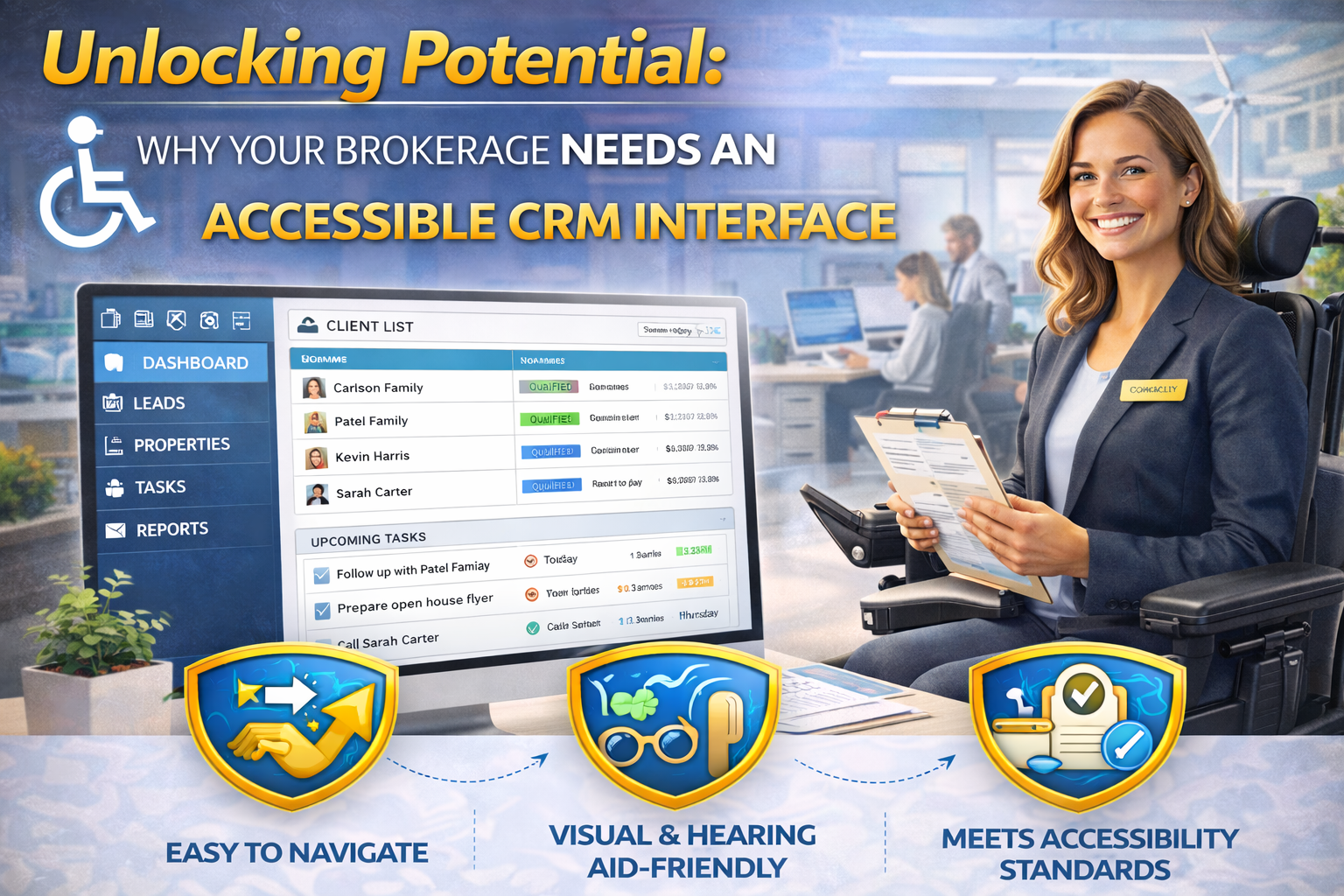
Are clunky digital tools exhausting your team? Learn how designing an Accessible CRM Interface empowers neurodivergent real estate professionals to thrive.
Table of Contents
I was sitting in the bullpen of a mid-sized real estate brokerage last fall, watching a highly successful transaction coordinator named David absolutely melt down. David is brilliant. He remembers the specific closing terms of a complex deal from three years ago and rarely misses a contingency deadline. He is also on the autism spectrum.
The brokerage had just rolled out a new, flashy real estate software platform. Because it lacked an Accessible CRM Interface, it packed the screen with animated menus, pop-up notifications, and a highly cluttered dashboard. For David, this wasn’t just annoying; it was a sensory nightmare. The sheer cognitive load of navigating this messy database was causing him to make mistakes he never used to make.
That afternoon made me realize a hard truth about our industry. We spend thousands recruiting top talent, but we often force them to work in digital environments that actively work against their neurology. When we ignore neurodiversity, implementing an Accessible CRM Interface becomes the difference between a thriving team and a burned-out roster.
The Hidden Cost of “Standard” Real Estate Software
Neurodivergent individuals—those with ADHD, Autism, Dyslexia, and other neurological differences—make up a significant portion of the workforce. In real estate, these professionals often bring unmatched hyper-focus, creative problem-solving, and deep analytical skills to the table.
A property management specialist with ADHD might be incredible at handling rapid-fire tenant emergencies. An autistic agent might excel at hyper-analyzing local property listings to find undervalued commercial real estate. But these strengths are quickly neutralized by bad design. If your database features low-contrast text, flashing alerts, and endless nested folders, you are creating massive friction.
The Business Case for an Accessible CRM Interface
When a real estate brokerage invests in an Accessible CRM Interface, the benefits ripple out to the entire team. It turns out that designing for neurodivergence makes the software better for everyone. Clear typography, logical workflows, and customizable dashboards don’t just help someone with dyslexia read a client file; they help a neurotypical agent quickly grab a phone number while rushing to a showing.
Think about the traditional closing process. It involves dozens of documents, strict compliance checks, and non-negotiable deadlines. A cluttered screen can easily cause a missed signature, delaying a commission check and frustrating the buyer. An Accessible CRM Interface streamlines this visual noise. It highlights the next required action without screaming at the user with bright red, flashing badges.
Visual Clarity and Managing Property Listings
One of the biggest hurdles in real estate tech is the sheer volume of data. Agents are staring at hundreds of active files, client profiles, and MLS data points daily. For someone with ADHD, an interface that presents all this information at once is paralyzing.
An Accessible CRM Interface solves this through “progressive disclosure.” This means the screen only shows the information necessary for the immediate task. If an agent is making prospecting calls, they only need the contact’s name, phone number, and last interaction notes. They do not need to see the entire history of the client’s past mortgage rates dominating the sidebar.
According to the National Association of Realtors (NAR), adopting streamlined, user-friendly technology is a top priority for modern brokerages looking to scale. When you deploy an Accessible CRM Interface, you align with this industry shift, ensuring your tech stack supports, rather than hinders, your workforce.
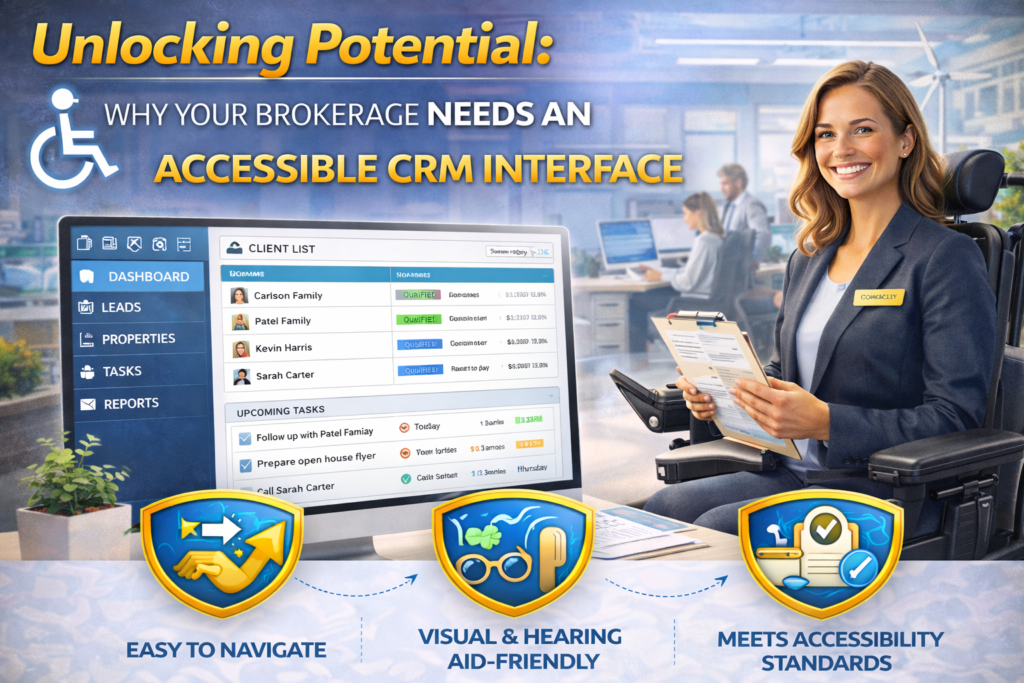
Customization: The Heart of an Accessible CRM Interface
There is no one-size-fits-all solution for neurodiversity. What works perfectly for a dyslexic user might be highly distracting for someone with autism. The hallmark of a truly Accessible CRM Interface is robust customization.
Users should be able to shape their digital environment. They need the ability to turn off non-essential animations, mute alert sounds, and adjust text sizing.
- Dark Mode Toggles: Crucial for reducing eye strain and sensory overload during long shifts.
- Notification Control: Allowing agents to batch their alerts rather than receiving a constant ping for every new email.
- Simplified Navigation: Using clear, descriptive text labels instead of ambiguous, tiny icons.
I worked with a commercial real estate broker who doubled her daily outreach simply by disabling the “new lead” sliding notification in her database. It stopped breaking her hyper-focus, allowing her to stay in the zone and close more deals.
For a deeper understanding of these cognitive principles, Wikipedia’s entry on Neurodiversity offers a fantastic look at how different brains process information. Understanding this spectrum is the first step in demanding better software from your vendors.
How to Audit Your Current Systems
Take a hard look at the tools your real estate professionals use every day. Are the fonts legible? Is the color contrast high enough? Do error messages clearly explain how to fix the problem, or do they just flash a confusing red code?
If your team is constantly creating their own workarounds—like exporting client lists to Excel because the main database is too hard to read—your software is failing them. Upgrading to an Accessible CRM Interface eliminates these shadow systems. It keeps your proprietary data secure while giving your team a workspace that actually respects their mental bandwidth and improves client retention.
FAQ Section
What exactly is an Accessible CRM Interface? It is a customer relationship management system designed with inclusive usability principles. It features customizable layouts, high-contrast visuals, and reduced cognitive load to accommodate neurodivergent users and improve overall daily efficiency.
How does an Accessible CRM Interface benefit real estate brokerages? Beyond supporting neurodivergent staff, it significantly reduces errors during complex tasks like the closing process. A clean, intuitive design reduces training time for new hires and boosts overall client retention by freeing up agents to focus on relationships rather than fighting with software.
Can this inclusive design help agents without neurodivergent conditions? Absolutely. Features like dark mode, simplified menus, and progressive disclosure reduce visual fatigue and mental exhaustion for all real estate professionals, leading to higher productivity across your entire office.
What features should I look for when choosing real estate software? Look for platforms that offer deep customization. Your team should be able to toggle notifications, adjust color contrasts, and hide modules they don’t regularly use to keep their daily dashboard clean and focused.
Is it expensive to implement these design changes? Many modern platforms already offer accessibility toggles built-in at no extra cost. When shopping for new software, simply make inclusive design a core requirement in your vendor selection process.
Conclusion
Real estate is fundamentally a business of human connection. We rely on the empathy, sharp memory, and strategic thinking of our team members to close deals and serve our communities. If the digital tools we mandate are exhausting our staff before they even pick up the phone, we are setting ourselves up to fail.
Adopting an Accessible CRM Interface is a commitment to your team’s well-being and your brokerage’s bottom line. It proves that you value the diverse minds that make your business profitable. Don’t let bad design drain your best talent. Take the time to audit your systems, ask your neurodivergent employees for feedback, and invest in technology that works for everyone.
